
Cisco Data Center SSDs
As SSD technology evolves, manufacturers are improving their reliability processes. With maturity, reliability will become a smaller differentiating factor in the choice between SSDs and HDDs. With the availability of latest SSDs at higher capacities, combined with better performance and lower cost, they are increasingly becoming an obvious storage choice for enterprises. To meet the requirements of different application environments, Cisco offers both enterprise performance SSDs and enterprise value SSDs. They all deliver superior performance compared to HDDs; however, enterprise performance SSDs support higher read-write workloads and have a longer expected service life. Enterprise value SSDs provide relatively large storage capacities at lower cost, but they do not have the endurance of the enterprise performance SSDs. Cisco uses several different technologies and design requirements to help ensure that our SSDs can meet the reliability and endurance demands of server storage. Reliability depends on many factors, including use, physical environment, application I/O demands, vendor, and mean time before failure (MTBF). In challenging environments, the physical reliability of SSDs is clearly better than that of HDDs given SSDs’ lack of mechanical parts. SSDs can survive cold and heat, drops, and extreme gravitational forces (G-forces). However, these extreme conditions are not a factor in typical data centers. Although SSDs have no moving heads or spindles, they have their own unique stress points and failures in components such as transistors and capacitors. As an SSD ages, its performance slows. The SSD controller must read, modify, erase, and write increasing amounts of data. Eventually, memory cells wear out. **Some common SSD points of failure include:>>Bit errors: Random data bits may be stored in cells.>>Flying or shorn write operations: Correct write content may be written in the wrong location, or write operations may be truncated due to power loss.>>
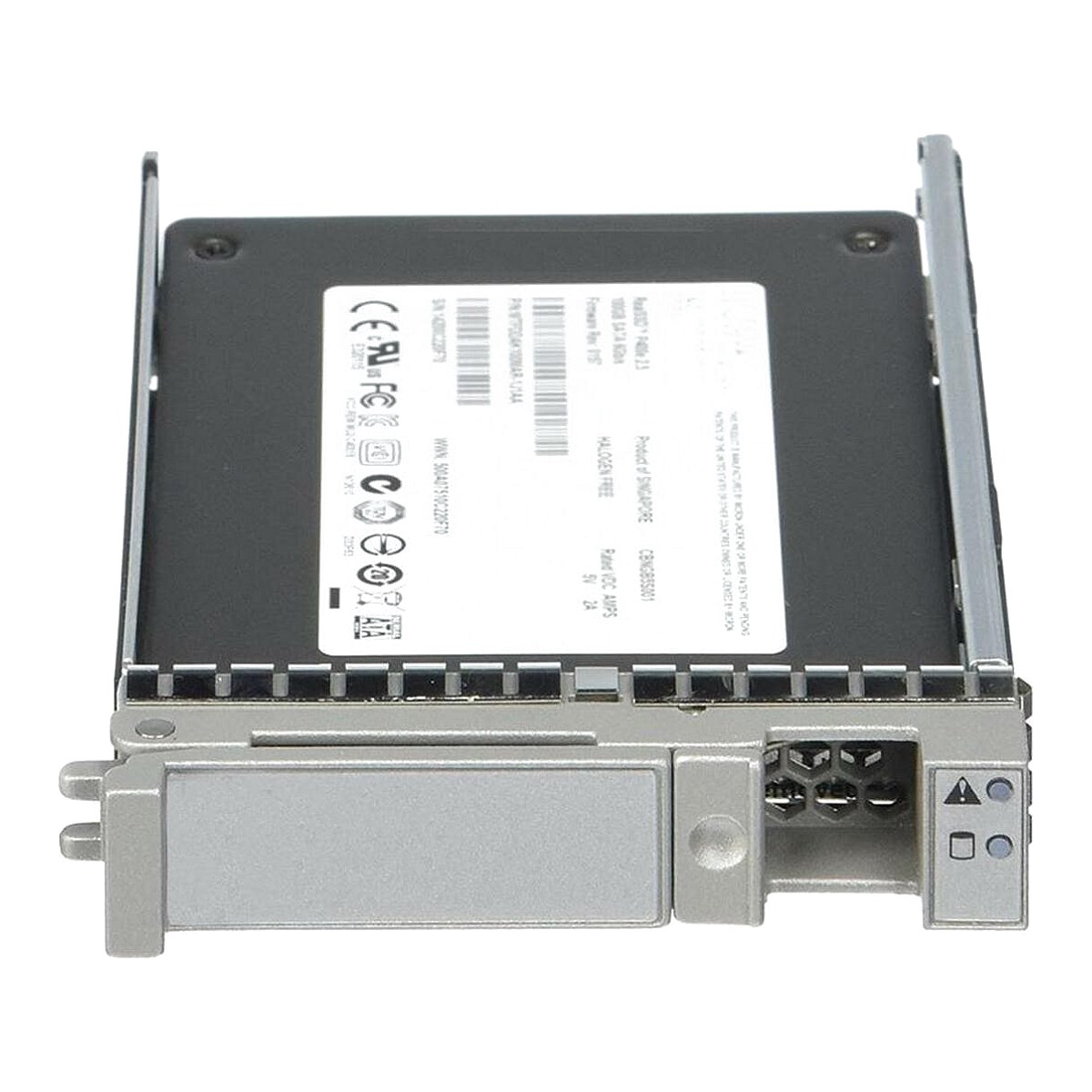
Cisco 3.8TB SAS 12Gb s Low Endurance 1X DWPD 2.5in Enterprise Value Solid State Drive Cisco Part #: UCS-SD38TH61X-EV. Brand: Cisco. Part #: UCS-SD38TH61X-EV. Alt. Part #: UCS-SD38TH61X-EV. Specs:-. :: Capacity: 3.84TB…
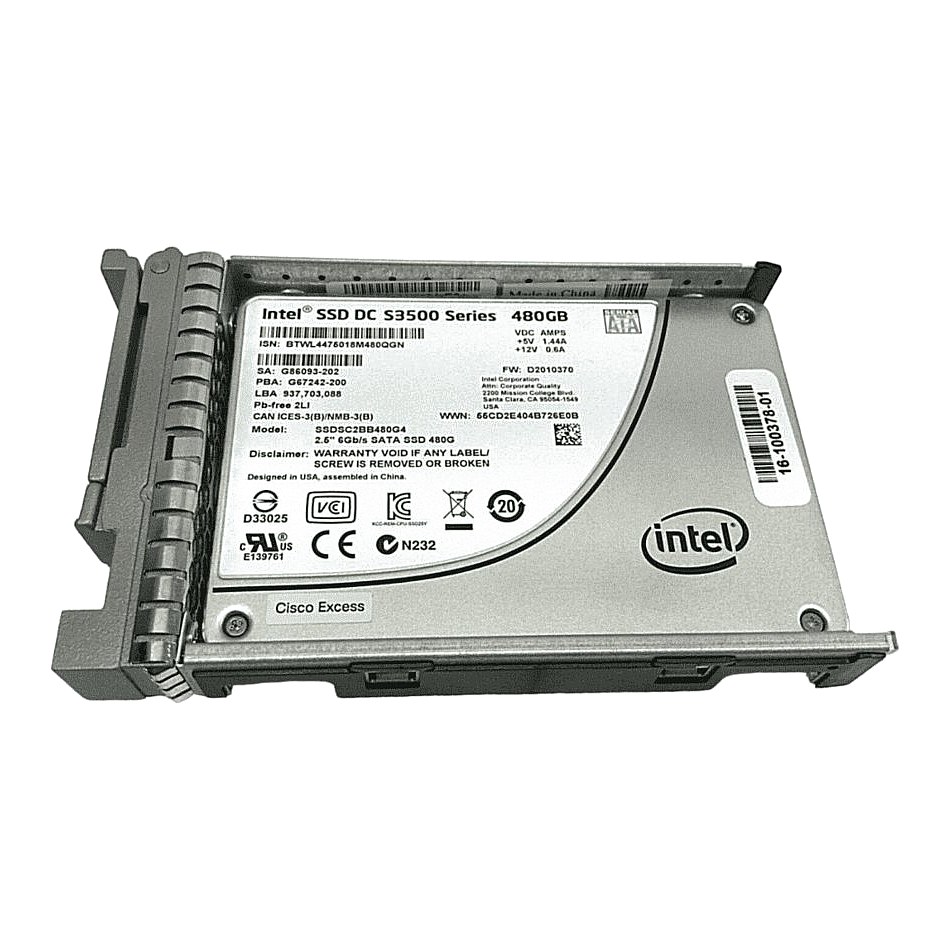
Cisco UCS 2.5in SFF 6G Enterprise SATA 480GB SSD Drive for UCS Servers Part #: UCS-SD480G0KS2-EV. Brand: Cisco. Part #: UCS-SD480G0KS2-EV. Alt. Part #: UCS-SD480G0KS2-EV. Model: Cisco Enterprise Value. Specs:-. :: Type…
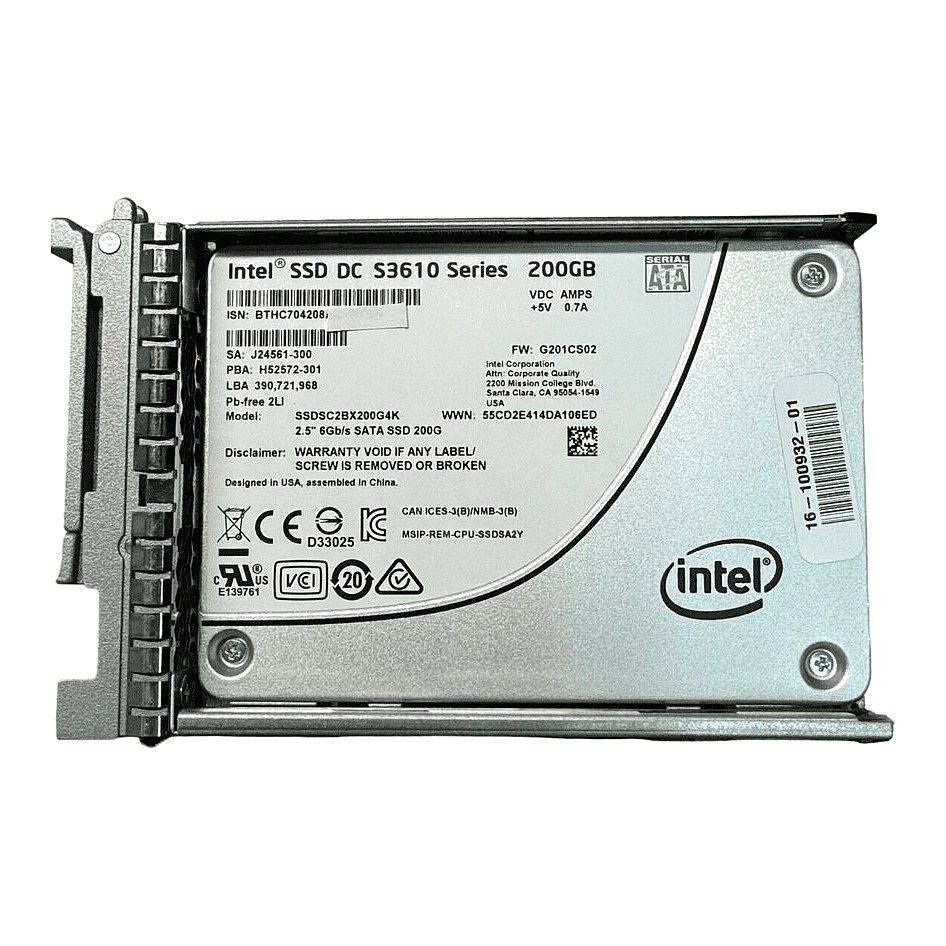
Cisco 200 GB 2.5in Internal SATA (SATA/600) Datacenter Hot Swappable Solid State Drive Part #: UCS-SD200G12S3-EP. Brand: Cisco. Part #: UCS-SD200G12S3-EP. Alt. Part #: UCS-SD200G12S3-EP. Specs:-. :: Capacity: 200 GB…
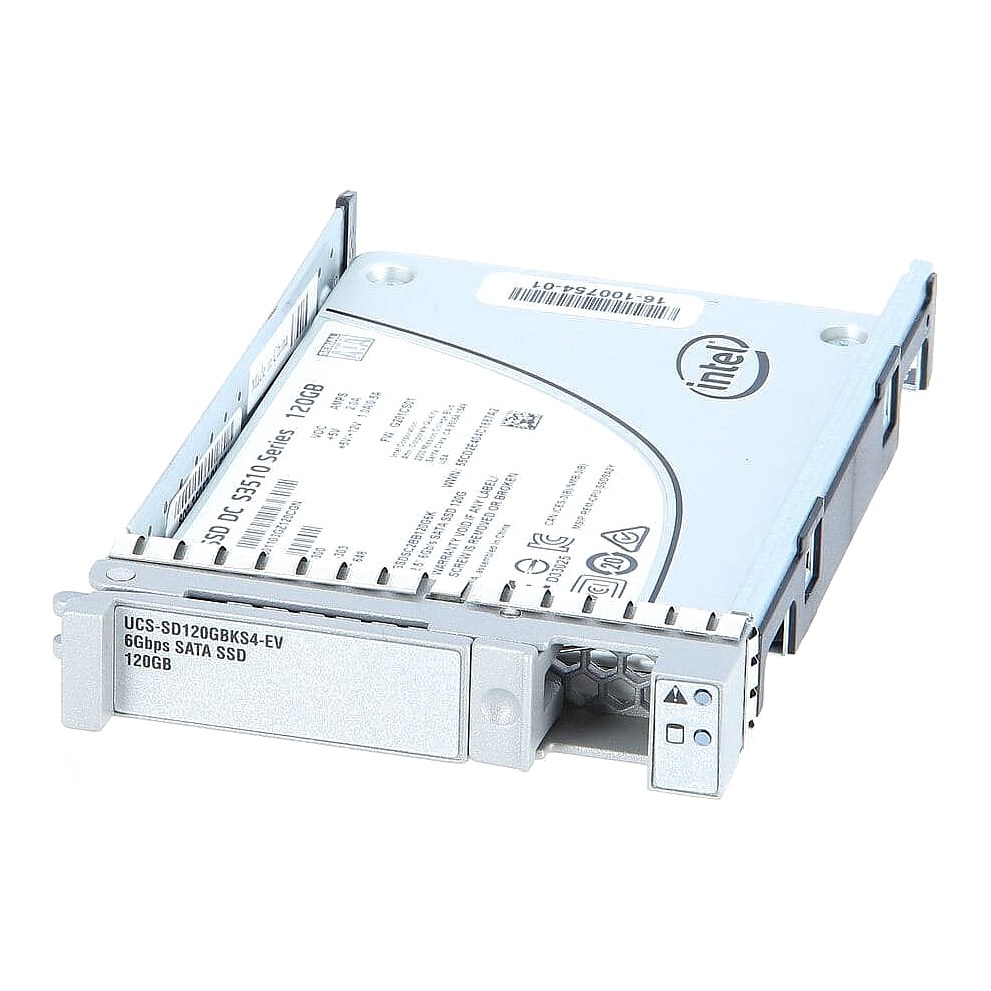
Cisco 120GB 2.5in Enterprise Value 6G SATA Hot Plug SSD Part #: UCS-SD120GBKS4-EV. Brand: Cisco. Part #: UCS-SD120GBKS4-EV. Alt. Part #: UCS-SD120GBKS4-EV. Specs:-. :: Capacity: 120GB. :: Speed: Solid State Memory…