
JBODs
## **JBODS: What are these?** JBOD (which stands for "just a bunch of disks") generally refers to a collection of hard disks that have not been configured to act as a redundant array of independent disks (RAID) array. RAID arrays write data across multiple disks as a way of storing data redundantly (to achieve fault tolerance) or to stripe data across multiple disks to get better performance than anyone disk could provide on its own. Typically, a RAID array will appear to the operating system as a single disk. JBOD is an alternative to using a RAID configuration. Rather than configuring a storage array to use a RAID level, the disks within the array are either spanned or treated as independent disks. Spanning configurations use a technique called concatenation to combine the capacity of all of the disks into a single, large logical disk. Although some RAID levels also concatenate disks, numbered RAID levels generally use striping or parity while JBOD does not. **Figure 1: A schematic example of a JBOD storage system** JBOD means the individual disks are presented (to a server) with no amalgamation, pooling or structure applied. The term is in widespread use, especially in the context of computers that have software volume management, such as LVM (AIX, HP-UX, Linux), DiskSuite (Solaris), ZFS (Solaris), Veritas Volume Manager (Unixes), Windows and so on. **Example of a JBOD: Ultrastar Data60 Hybrid Storage Platform**
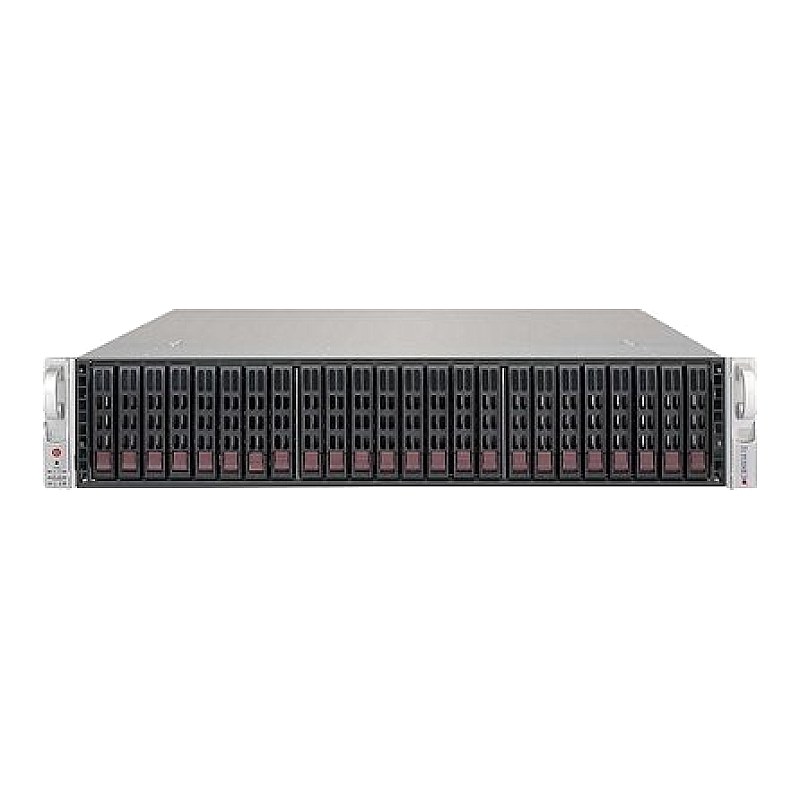
SuperChassis 216BE1C-R741JBOD Drive Enclosure 2U Rack-mountable. This is a 2U rack-moutable Supermicro SuperChassis 216BE1C-R741JBOD drive enclosure. No HDDs included. Brand: Supermicro. Part #: 216BE1C-R741JBO…