
Serial Cables
**What are these and what are their use(s)?** A serial cable is a cable used to transfer information between two devices using a serial communication protocol. The form of connectors depends on the particular serial port used. A cable wired for connecting two DTEs directly is known as a null modem cable. Serial cables are used for the serial transmission of data. They support communication standards such as RS232, RS422, and RS485, as well as Fibre Channel, IEEE 1394 or FireWire® (Apple Computer, Inc.), and universal serial bus (USB). **Types of Serial Cables** - **RS232 cables** support a typical transmission speed of 9600 bps at 15 m. They provide asynchronous communication capabilities with hardware flow control, software flow control, and parity checking. Most gears, instruments with digital control interfaces, and communication devices have an RS232 interface. - **RS422 cables** support multipoint connections and provide much longer transmission distances than RS232. The RS422 standard uses a differential transmission technology, and provides high-speed transmissions up to 10 Mbps over a maximum transmission distance of 1.2 km at 110 kbps. - **RS485 cables** are used in applications where a single controller needs to control multiple devices (up to 64). RS485 uses three-way instead of two-way transmissions, but is compatible with the RS422 interface. It provides a two-wire bus topology and provides a very inexpensive network system. - **Fibre Channel cables** consist of twisted-pair, coaxial, or fiber optic cables that use a high-speed, serial data transfer architecture. Small computer system interface (SCSI) devices can use Fibre Channel arbitrated loop (FC-AL), the most popular Fibre Channel typology. Using optical fiber, FC-AL supports full-duplex data transfer rates of 100 Mbps. - **FireWire cables** or **IEEE 1394** cables are used for very fast digital data transfers such as streaming video. Applications include high-speed peripheral connections to pe
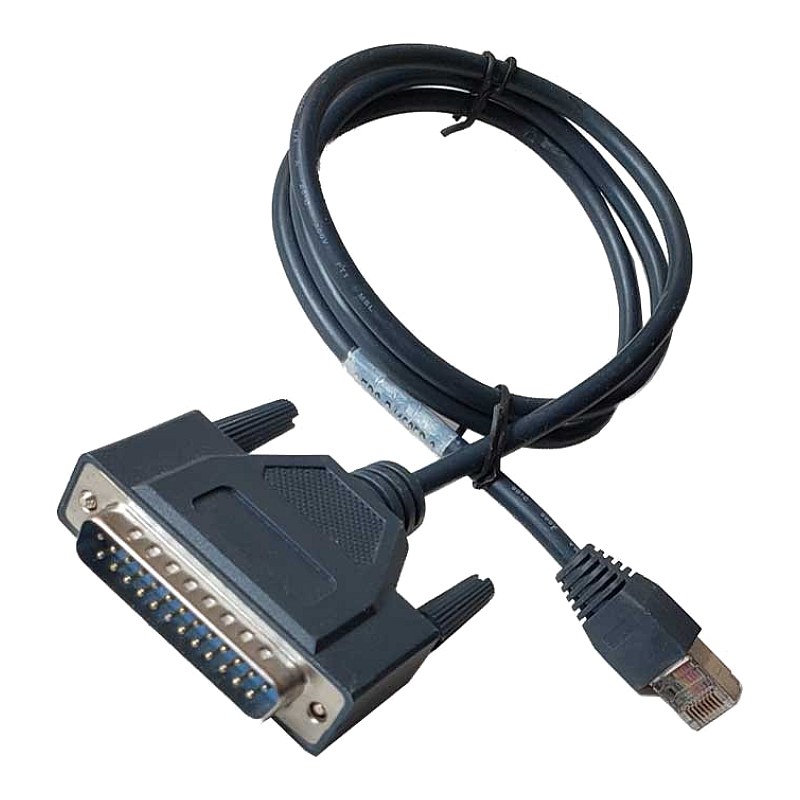
RJ45 to DB25 male NullModem Cable COM to serial printer Part #: RJ4512D. Brand: Generic. Part #: RJ4512D. Specs:-. :: Type: Null Modem Cables. Compatibililty: ::Compatible With Most Major POS Systems. Condition: New…
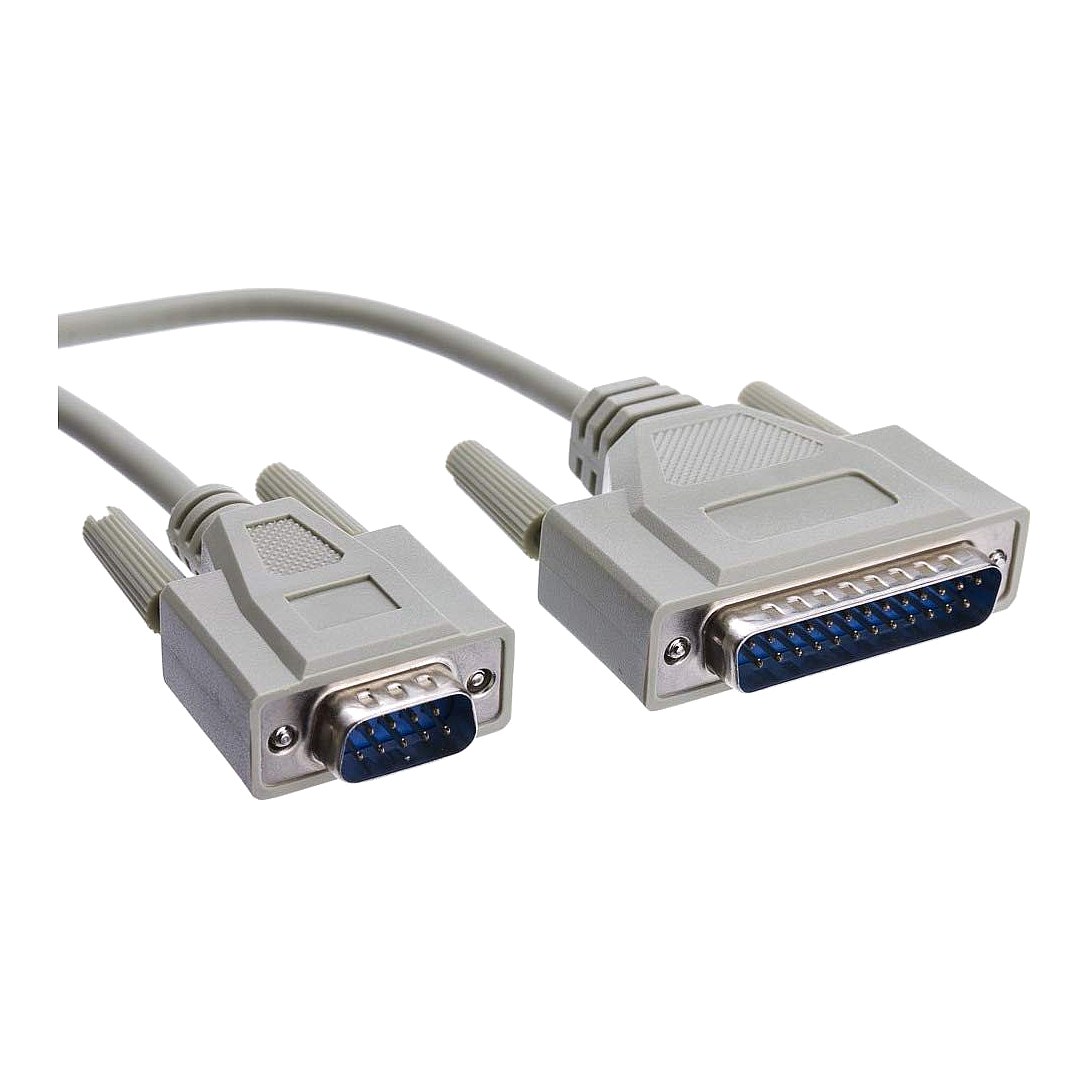
Serial Cable-DB9 Male to DB25 Male UL Rated RS232 9-Conductor 2m. Brand: Generic. Model: SER-TEK-MM-9TO25. Condition: New. Warranty: 1 (one) year Tekmart warranty
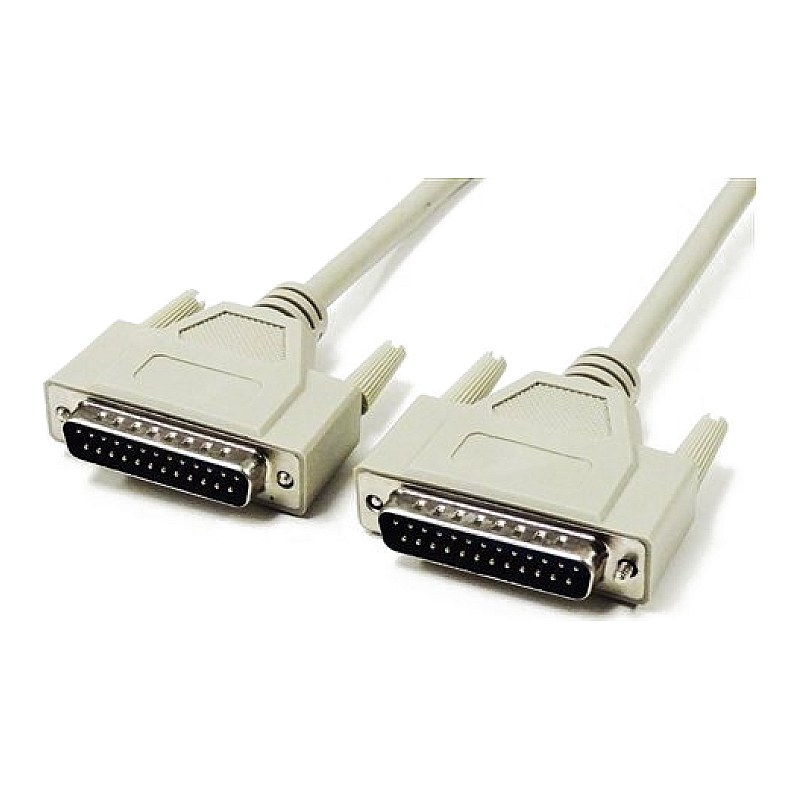
DB25 Male to DB25 Male Serial Cable - Straight-Through. This is a genuine DB25 Male to DB25 Male Serial Cable - Straight-Through 2m cable. This DB25 serial cable consists of a DB25 male on both ends. It is commonly used…
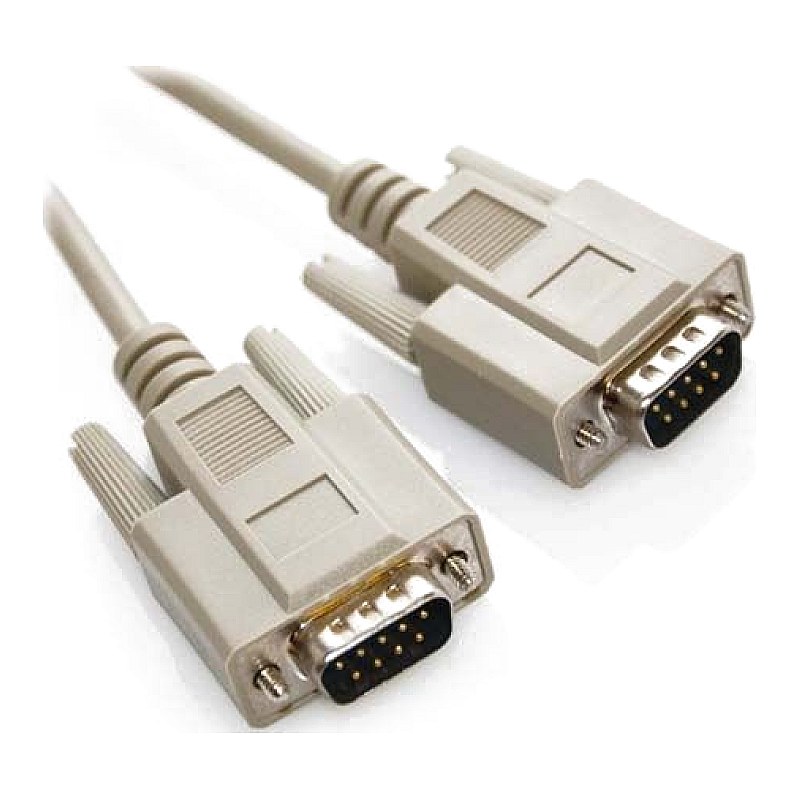
Serial Cable Male to Male Db9 9 Pin Rs232 M-m Com Port Cable. This is a genuine DB9 serial cable is used to connect PC and device with DB9 serial port. Brand: Tekmart. SKU: CAB-2M-MM2. Fully shielded to prevent unwanted…