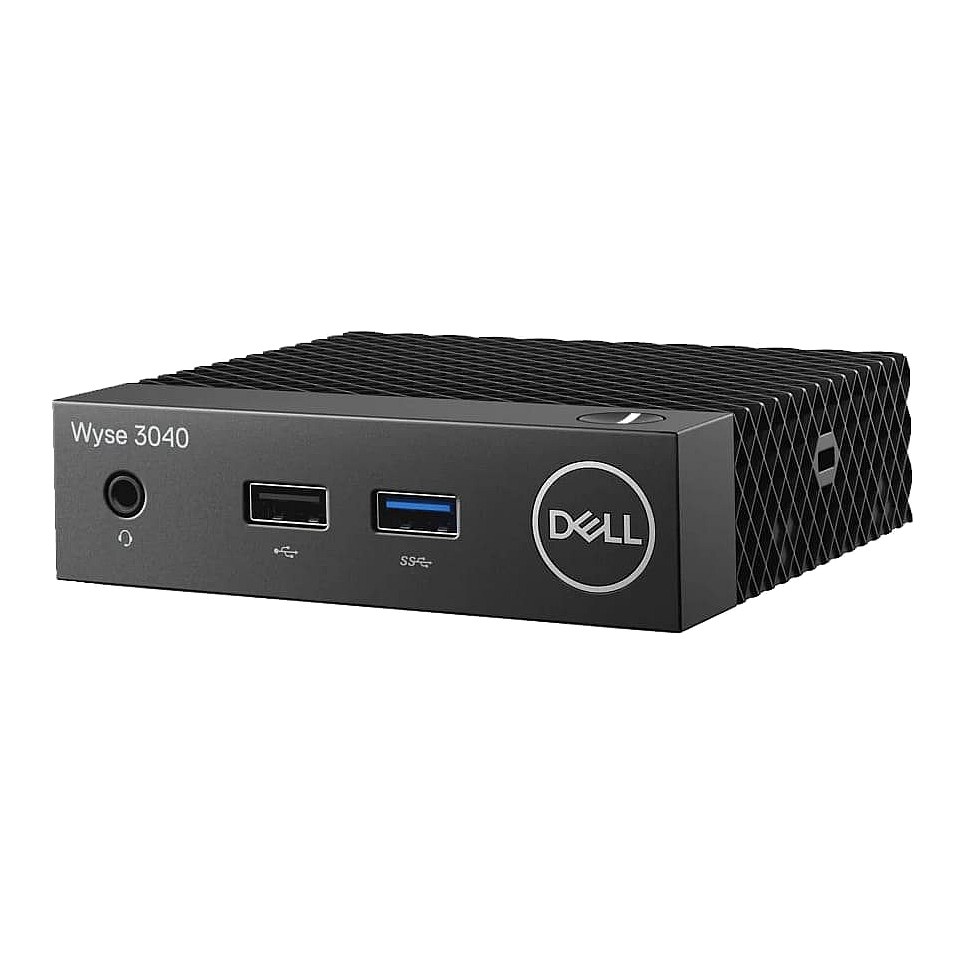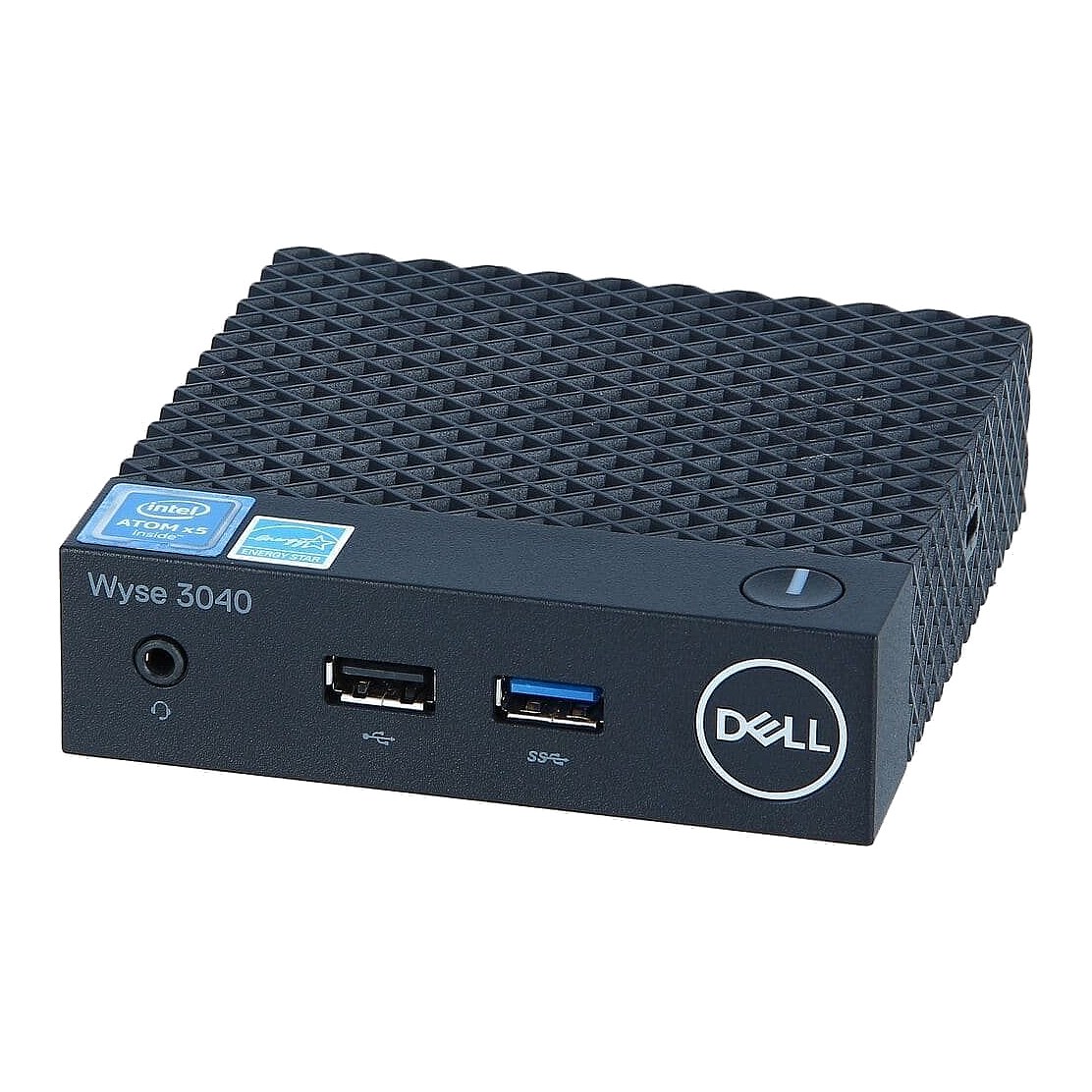
3P0YX Dell 3040 Thin Client Atom x5-Z8350 2GB 16gb OS9 w/PCoIP

R4 831.75
was
Includes VAT
Tell me if the price drops
Dell 3040 Thin client DTS 1 x Atom x5 Z8350 / 1.44 GHz,RAM 2GB flash / eMMC 16GB,no graphics,GigE pre-installed Wyse Thin OS9 with PCoIP DPN: 3P0YX
- Brand: Dell
- Part #: 3P0YX
- Specs:-
- :: Type: Thin client
- :: Operating system: Wyse ThinOS (Version ThinOS 8.6)
- :: Processor: Intel Atom x5-Z8350 (Quad Core 1.44 GHz)
- :: Memory: 2GB DDR3L 1600MHZ
- Ports:
- :: 3x USB 2.0
- :: 1x USB 3.1 Gen 1
- :: 1x audio-mic combo jack
- :: 2x DisplayPort
- :: 1x 1Gb/s RJ45
- Features:
- :: Built-in Kensington Security Slot
- :: 10Mb/100Mb/1Gb Copper RJ45
- :: Audio-mic combo jack
- :: Dual display port support (2560x1600 @ 60Hz)
- :: AC Adapter Included (DPN: 0NNHRG)
- Condition: New
- Warranty: 3 (three) year manufacturer warranty
Key points to know on the special feature, (PCoIP), they sport from other variants of Wyse 3040 thin clients:-
To start with,what is PCoIP (PC over IP)?
Well, PC over IP (PCoIP) is a remote display protocol that Teradici developed for delivering remote desktops and applications to endpoints.
PCoIP works by rendering client desktops on a network or cloud server. The desktop's pixels are compressed, encrypted and then transmitted to the client device. The client then decrypts and renders the desktop view for the user.
PCoIP uses the User Datagram Protocol (UDP), an alternative to the Transmission Control Protocol (TCP). UDP features process-to-process communication and uses a loss-tolerant, low-latency connection to link an application to the internet. PCoIP delivers bitmaps, which define where a pixel appears on the screen and what color it should be, by encoding them on a remote host and then streaming the data to the client. It transmits only regions of the screen that change from frame to frame.
From the endpoint perspective, it's almost as if the client is watching a real-time movie of the desktop's activities.
The protocol can handle multimedia and graphics-heavy applications, but it does increase the processing load on the remote host.
PCoIP was a hardware-based desktop virtualization product designed around a blade server that rendered desktop images and a client device that somewhat resembled a hockey puck. The client device was equipped with a proprietary chip that enabled the use of PCoIP communications between the client and server.
Core features and components of PCoIP
PCoIP has evolved over the years, especially with regard to its port requirements.
For example, VMware supports PCoIP over both TCP and UDP. In VMware View 4.0 and 4.1, PCoIP used port number 500002. In VMware View 4.5, VMware changed the port number to 4172. Similarly, the PCoIP management console initially used TCP port 50000, but VMware changed it to port number 5172 in version 2.0 of the management console.
PCoIP is best known for its use in VMware Horizon, but Teradici continues to offer remote workstation cards, zero clients, graphics agents, and clients that allow organizations to use PCoIP in data center and cloud deployments.
- Free collection from our store
- Secure checkout